a s a n j 0 h e a t i n g
why-element-failed

Why Elements Failed

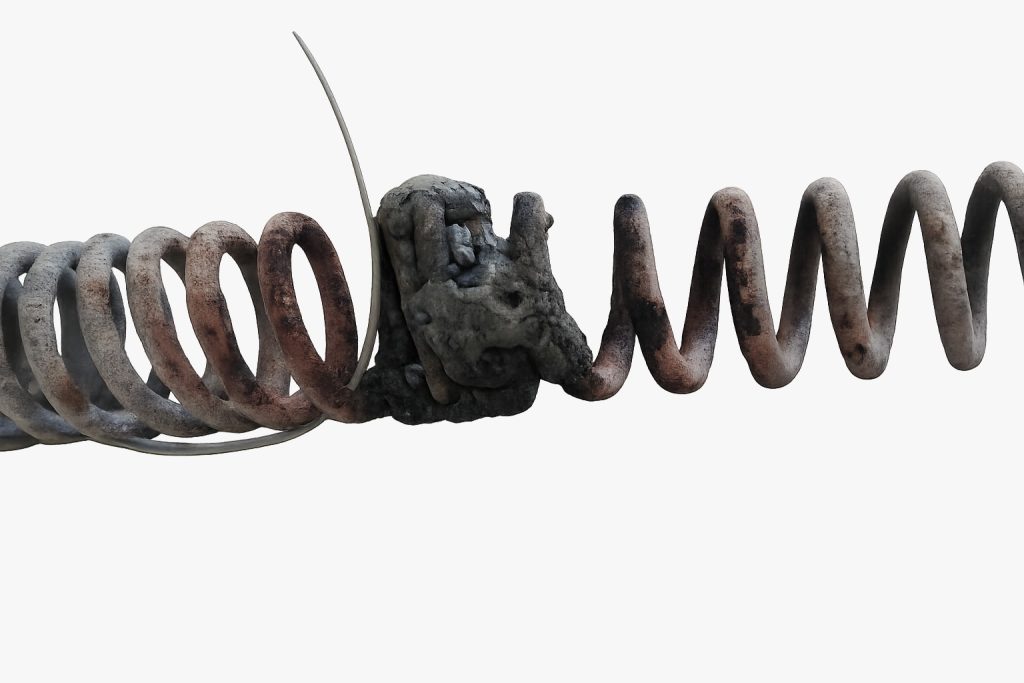
Batch furnace (72 kW) was designed to operate at 1100°C. On paper, it looked fine. In practice, the heating elements failed prematurely.

Why?

Because heater design above 1000°C becomes extremely critical.
Especially when it is indirect and roof heating

What went wrong

Elements inside ceramic tubes heating from roof across the width.
The hot zone was divided into two sections, but the designer used a single-shank element.
The actual element temperature was ignored.
To achieve 1100°C furnace temperature, element temperature was reaching ~1300°C.
Standard drawn wire was used, not suitable for sustained high element temperature. At 1300 Deg C coil collapse due to low Creep strength

Result

  • Overheated elements
  • Reduced life
  • Frequent failures

Our corrective design

Redesigned elements as double-shank, matching the split hot zone.
Reduced power loading to control element surface temperature.
Upgraded wire from normal drawn wire to Kanthal APM, capable of withstanding 1300°C+.
Optimized support and heat distribution for stable operation.

Outcome

  • Stable furnace performance at 1100°C
  • Significantly improved element life
  • No overheating or distortion

Key takeaway:

Furnace temperature is not the same as element temperature.
Above 1000°C, even a small design assumption can cut heater life by more than 40%.

Chat with us!
Go To Top