


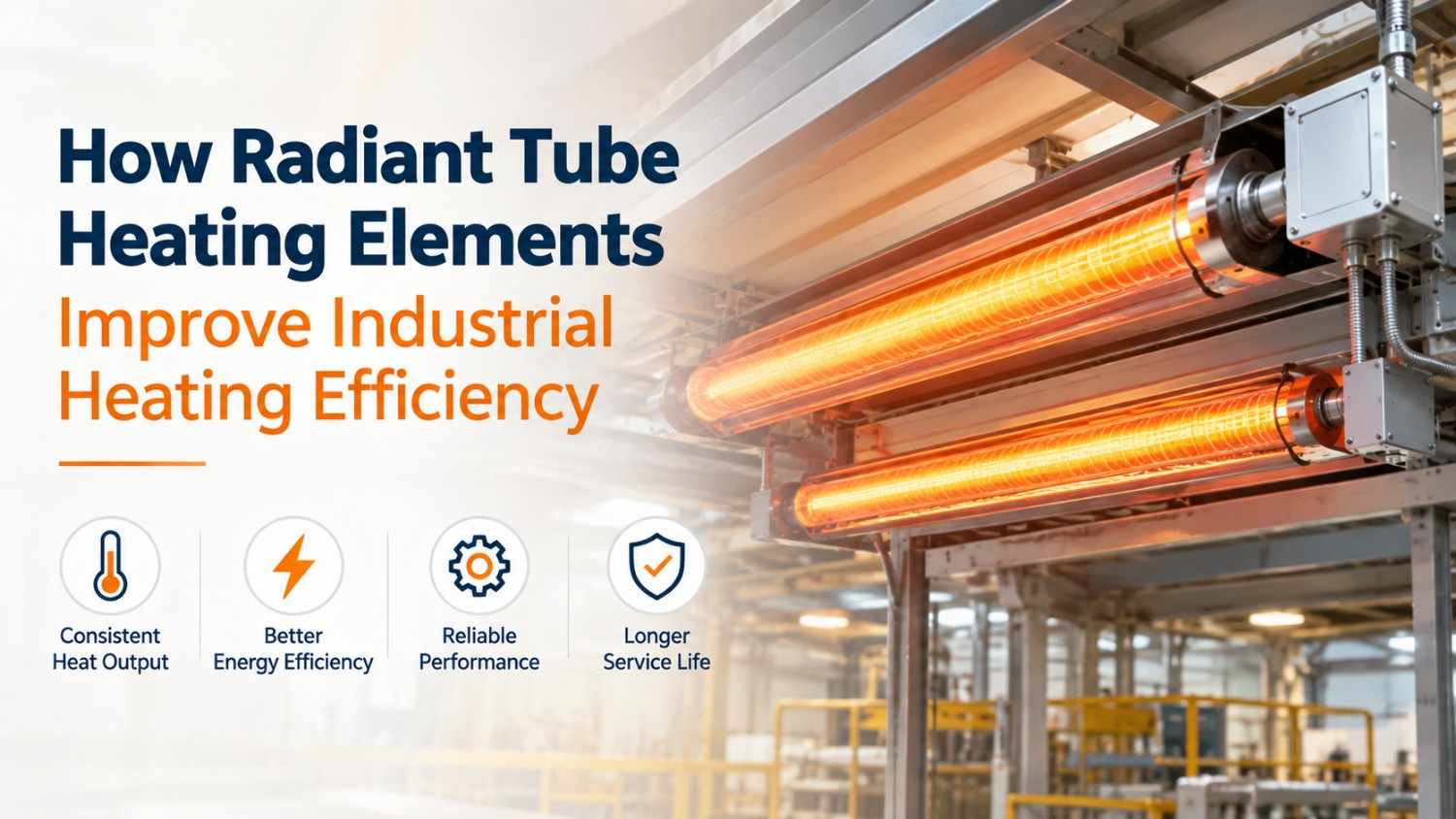
How Radiant Tube Heating Elements Improve Industrial Heating Efficiency
Industrial heating applications require precision, durability, and energy efficiency. This is something that conventional heating solutions struggle to deliver across the demanding operational conditions of modern manufacturing, heat treatment, and process heating environments.
The technology choices made when specifying heating equipment for these applications carry long-term consequences. This is why understanding how radiant tube heating elements achieve superior thermal efficiency compared to alternative heating approaches is important. This blog shares how these elements improve heating in industrial settings.
Understanding How Radiant Tube Heating Elements Work
They operate by containing combustion or electrical resistance heating within a ceramic or metallic tube that radiates thermal energy outward toward the target material or atmosphere without direct contact between the heat source and the process environment. Here are the core operating principles that define radiant tube heating element function-
- Heat generated within the tube radiates outward through the tube wall to the surrounding environment
- The sealed tube design prevents combustion gases or electrical components from contaminating the process
- Radiant heat transfer operates independently of convective air movement within the furnace chamber
- Uniform tube surface temperature distributes heat evenly across the target area
- Tube materials selected for specific temperature ranges and chemical exposure environments
- Electrical resistance variants offer precise control without combustion management complexity
- Ceramic and metallic alloy tube options suit different temperature and atmospheric requirements
Superior Energy Efficiency Compared to Alternative Heating Methods
The thermal efficiency advantage of radiant tube heating elements over direct-fired and open coil resistance alternatives stems from the fundamental physics of radiant heat transfer. The containment design eliminates energy losses associated with uncontrolled combustion product dispersion and inconsistent heat distribution across the process chamber. This efficiency advantage directly results in measurable reductions in energy consumption and operating costs across every hour of continuous industrial operation.
Atmosphere Control and Process Quality Benefits
The sealed containment design of radiant tube heating elements provides an atmosphere control advantage. Carburising, nitriding, bright annealing, and other controlled atmosphere processes depend entirely on maintaining precise atmospheric composition throughout the heating cycle without contamination from combustion products or heating element degradation.
Temperature Range Capability and Material Selection
The operating temperature range achievable with radiant tube heating elements depends primarily on the tube material selected for the specific application and the temperature requirements of the industrial process being served. Below are the material options and their corresponding temperature and application characteristics-
- Silicon carbide tubes offering high-temperature capability up to 1650 degrees Celsius
- Alumina ceramic tubes providing excellent chemical resistance across oxidising environments
- Metallic alloy tubes balancing thermal performance with mechanical durability requirements
- High-chromium alloys offering strong oxidation resistance at temperatures up to 1200 degrees Celsius
- Recrystallised alumina providing exceptional stability at extreme operating temperatures
- Silicon nitride bonded silicon carbide offering thermal shock resistance for cycling applications
- Composite tube designs combining inner and outer material properties for specific performance requirements
Installation and Integration Considerations
Here are the installation and integration factors that determine real-world performance outcomes-
- Tube spacing calculations ensuring uniform heat distribution across the full furnace chamber
- Mounting system design accommodating thermal expansion without mechanical stress on the tube
- Control system integration enabling precise temperature management across multiple heating zones
- Power or fuel supply sizing matching the thermal load requirements of the specific application
- Thermocouple placement providing accurate temperature feedback representative of actual process conditions
- Airflow and atmosphere circulation design working in conjunction with radiant heat distribution
- Maintenance access provision enabling tube inspection and replacement without major furnace disassembly
Maintenance Requirements and Expected Service Life
The service life of radiant tube heating elements varies significantly depending on the tube material, operating temperature, thermal cycling frequency, and the chemical aggressiveness of the furnace atmosphere in which they operate. Below are the maintenance and service life factors that industrial operators should account for in their planning-
- Visual inspection protocols for identifying surface cracking, oxidation damage, and deformation
- Electrical resistance monitoring on resistance-heated variants detecting degradation before failure
- Thermal imaging assessment identifying hot spots indicating localised element deterioration
- Atmosphere leak testing confirming tube integrity in controlled atmosphere applications
- Cleaning procedures removing process deposits that affect radiant emission characteristics
- Replacement scheduling based on operating hours, temperature cycles, and condition assessment data
- Spare tube inventory management ensuring rapid replacement capability without extended production downtime
Conclusion
The thermal efficiency, atmosphere control, and process quality offered by properly specified and correctly installed radiant tube heating elements from suppliers like Asanjo Heating make them a preferred choice for many industrial heating applications. They are particularly useful in manufacturing settings that require accuracy, uniformity, and dependable heating performance. In cases where the application requires extreme heat tolerance, chemical stability, and longevity, the selection of materials becomes crucial. There are high-performing alloy materials available, such as the FeCrAl radiant tube heating element, which have the required properties to perform under extreme conditions.
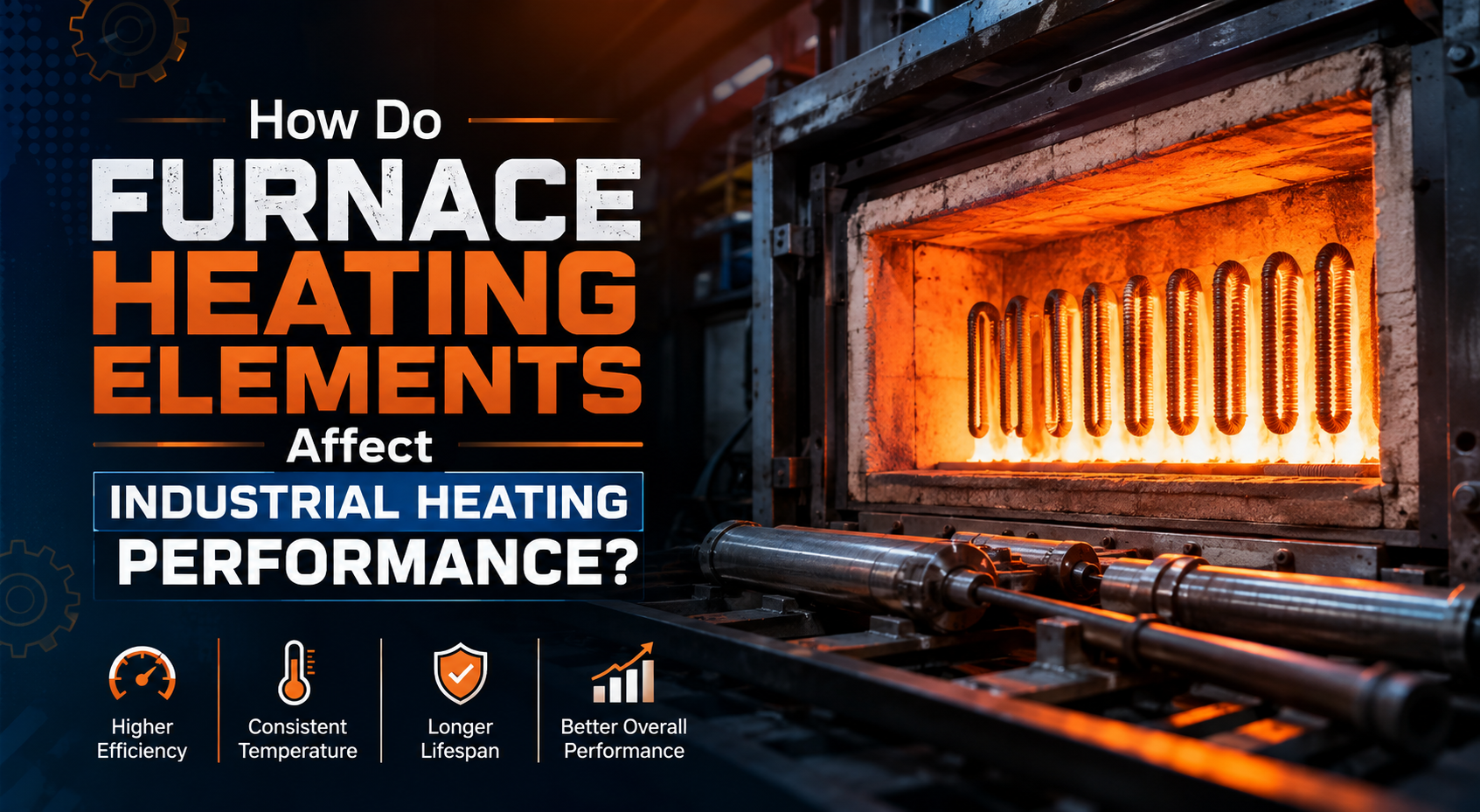
How Do Furnace Heating Elements Affect Industrial Heating Performance?
How Do Furnace Heating Elements Affect Industrial Heating Performance?
Ask anyone running an industrial furnace what actually decides output quality, and most will point to the obvious things: temperature settings, load size, maybe the operator’s experience. Few mention the furnace heating elements themselves, even though they’re the actual source of every degree of heat entering that chamber.
A slightly wrong alloy, an element past its prime, or poor placement inside the furnace, and suddenly you’re dealing with scrap batches or a power bill that keeps creeping up for no obvious reason. This post breaks down the specific ways these elements affect industrial heating performance, from how evenly heat spreads to how long the elements themselves hold up, and what it takes to keep them running the way they should.
Heat Distribution and Uniformity
A lot of operators don’t realise that uneven heating does not happen because of the furnace itself. In most cases, it usually comes from the elements inside it. When furnace heating elements wear unevenly or stay too close or too far apart, certain zones run hotter than others without anyone noticing until the output tells on them.
This issue comes to light only after an entire batch has already been affected. The points below explain what actually causes this unevenness and how it plays out on the shop floor:
- Ageing elements often degrade at different rates, creating hot spots that skew material properties across a batch.
- Spacing and placement determine how thermal energy spreads, so a bad layout means uneven results no matter how good the elements are.
- Routine calibration catches these shifts early, before they quietly ruin an entire production run.
Energy Efficiency and Operating Costs
This is the part that hits the balance sheet directly. Worn or mismatched elements draw more power to reach the same temperature, and that extra draw adds up fast over weeks of continuous operation, often without anyone connecting the dots until the utility bill arrives.
A lot of facilities chasing better industrial heating solutions assume they need a bigger furnace, when really, the fix is sitting inside the chamber they already have. Here’s what tends to drive that inefficiency up:
- Increased resistance in older elements forces the system to pull more power for identical output.
- Alloy choice, particularly nickel-chromium blends, affects how efficiently electrical energy actually converts to usable heat.
- Insulation quality paired with element design determines how much of that heat escapes before doing its job.
Element Material and Lifespan
Not every element is built to survive the same conditions, and that’s where a lot of facilities get caught out. Treating elements as a one-off purchase instead of a wear item tends to backfire in the form of unplanned downtime, usually at the worst possible moment in a production schedule. The following points cover what actually determines how long an element lasts:
- High-grade alloys hold up better against oxidation, which stretches their working life in high-heat environments.
- Elements put through frequent heating and cooling cycles wear out noticeably faster than those running steady state.
- Matching the element to your furnace atmosphere, whether oxidising, reducing, or inert, prevents early failure that could’ve been avoided.
Temperature Control and Process Precision
For processes like heat treating, sintering, or annealing, exact temperatures aren’t optional. They are the whole point. The responsiveness of your elements is determined by whether you can actually hold a tight thermal profile. It also depends on whether you’re constantly adjusting settings that should never have needed adjusting in the first place. Here’s how element responsiveness translates into real process outcomes:
- Elements that react faster will help regulate the speed of heating or cooling better.
- Reliable and precise elements cut down on scrap caused by overheating or underheating a batch.
- An efficient control system together with reliable elements will allow achieving repeatable results with certainty.
Final Words
At the end of the day, furnace heating elements aren’t just spare parts sitting in a cabinet. They’re what determines how efficient, consistent, and dependable your entire process really is. Get them wrong and everything downstream suffers. Get them right, and it shows up in your output and your costs. Asanjo Heating builds exactly this kind of reliability into its industrial heating solutions, which is why the elements you choose matter more than most people assume.
Frequently Asked Questions
How often should furnace heating elements be inspected or calibrated?
Routine calibration should be built into regular maintenance schedules rather than left until output problems appear. Catching wear-related shifts early prevents an entire production batch from being affected by hot spots that develop gradually.
Why do older heating elements increase energy costs?
As elements age, their resistance increases, so the system has to draw more power to reach the same temperature. This extra draw builds up gradually over weeks of operation, which is why the cost increase often isn’t noticed until the utility bill arrives.
What determines how long an industrial heating element will last?
Lifespan depends mainly on alloy quality, how often the element cycles through heating and cooling, and whether it’s matched correctly to the furnace atmosphere (oxidising, reducing, or inert). Mismatched elements fail well before they should.
Can heating elements affect product quality, not just energy use?
Yes. Elements that respond slowly to temperature changes make it harder to hold a tight thermal profile, which increases scrap from overheating or underheating a batch — particularly in precision processes like heat treating, sintering, or annealing.
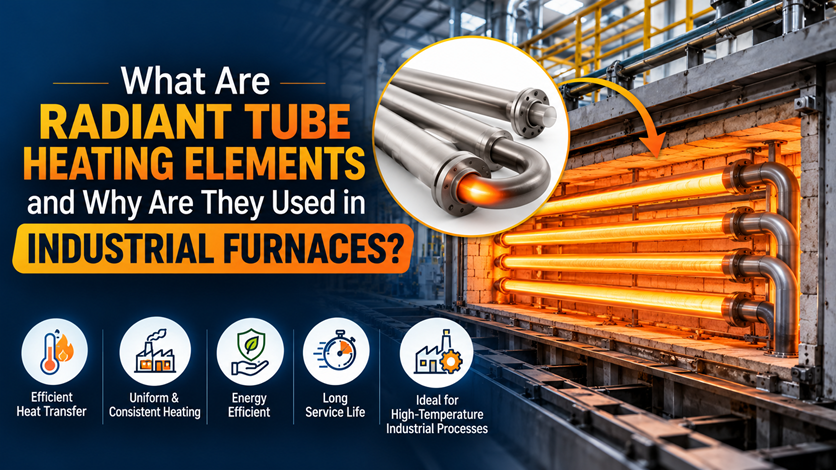
What Are Radiant Tube Heating Elements and Why Are They Used in Industrial Furnaces?
Radiant tubes are critical components in modern industrial heating systems — transferring heat precisely and efficiently without exposing the heating element to the furnace chamber atmosphere. For professionals working in metal finishing, heat treatment, or the wider furnace industry, understanding how radiant tube heating elements work is essential knowledge for optimising process outcomes, reducing downtime, and extending equipment life.
Thanks to their sophisticated construction and carefully selected materials, radiant tube heating elements improve product quality, reduce maintenance demands, and deliver reliable performance in some of the most demanding thermal processing conditions.
What Is a Radiant Tube Heating Element?
Radiant tube heating elements are enclosed tubular heating devices that transfer heat through radiation without any direct contact between the heating element and the furnace chamber atmosphere. The resistance heater sits inside a purpose-designed heat-resistant tube, which absorbs the generated heat and emits it as infrared radiation into the furnace workspace.
These elements are manufactured from heat-resistant materials selected specifically for their thermal and mechanical properties:
- Stainless steel — suitable for moderate operating temperatures
- Nickel alloys — chosen for corrosion resistance and thermal stability
- Iron-chromium-aluminium (FeCrAl) alloys — preferred for the highest operating temperatures
Standard radiant tube heating elements operate continuously at temperatures up to 1100°C. Specialist configurations using FeCrAl alloy combinations can reach operating temperatures of 1400°C — making them suitable for the most demanding high-temperature furnace applications.
How Do Radiant Tube Heating Elements Work?
Understanding the operating principle of these elements clarifies both their efficiency and their protective function within a furnace system. When electric current passes through the internal resistance heater, heat is generated according to the principle of Joule heating — and that energy is transferred in a controlled, sequential process:
- The internal resistance element generates heat through electrical resistance
- Heat transfers conductively to the surrounding radiant tube wall
- The radiant tube emits infrared radiation uniformly into the furnace chamber
- The workpiece absorbs radiant heat evenly across its surface
Because the heating element is fully enclosed within the tube, it is protected from direct exposure to the furnace atmosphere. This containment prevents oxidation or reduction of the element itself, significantly extending the operational life of the radiant tube heating element and maintaining the integrity of the process atmosphere simultaneously.
Why Industrial Furnaces Use Radiant Tube Heating Elements
Industrial furnaces operate under demanding conditions that require both temperature accuracy and long-term equipment durability. Radiant tube heating elements satisfy these requirements across several critical performance dimensions.
1. Uniform Heat Distribution Across the Furnace Chamber
One of the most significant performance advantages of radiant tube heating elements is their ability to deliver consistent, uniform heat distribution throughout the furnace workspace. Because infrared radiation reaches the workpiece evenly from all angles, temperature variation is minimised — which is particularly important in applications where consistency directly affects product quality:
- Metal heat treatment and case hardening
- Annealing and stress relief processes
- Glass manufacturing and tempering
- Ceramic kiln firing
- Controlled atmosphere food processing
Reducing temperature variation across a batch reduces the proportion of products that fail quality inspection — improving overall process yield.
2. Protection of the Furnace Process Atmosphere
Many industrial processes require a tightly controlled furnace atmosphere — either reducing, neutral, or inert — to achieve the correct metallurgical or chemical outcome. Because radiant tube heating elements isolate the heating source from the furnace chamber entirely, they allow these protective atmospheres to be maintained without contamination from the heating element itself.
This is especially important in oxidation-sensitive heat treatment processes such as bright annealing, carburising, and nitriding, where even trace atmospheric interference can compromise the quality of the treated workpiece.
3. Excellent High-Temperature Performance With FeCrAl Alloys
Continuous high-temperature operation is a fundamental requirement for most industrial furnace applications. FeCrAl radiant tube heating elements are engineered to meet this requirement — the alloy forms a dense, self-healing alumina oxide (Al₂O₃) layer on its surface during initial heating, which provides exceptional protection against further oxidation at extreme temperatures.
The performance advantages of FeCrAl alloy heating elements include:
- Superior oxidation resistance compared to conventional NiCr alloys
- Higher maximum operating temperatures — up to 1400°C in specialist configurations
- Extended service life, reducing replacement frequency and maintenance costs
- Consistent mechanical properties maintained across prolonged high-temperature cycling
- Dimensional stability that preserves element geometry under thermal stress
4. Energy-Efficient Heat Transfer
Energy efficiency is a primary operational objective for industrial manufacturers. Radiant heating delivers heat directly to the workpiece surface through infrared radiation, without the inefficiency associated with heating and recirculating large volumes of process air. This targeted heat transfer approach reduces total energy input while maintaining precise temperature control — directly lowering operating costs per production cycle.
According to the International Energy Agency, industry accounts for approximately 37% of global final energy consumption. In this context, the efficiency gains delivered by radiant tube heating elements carry both economic and environmental significance for manufacturing operations.
5. Reduced Maintenance and Extended Equipment Life
The enclosed design of radiant tube heating elements protects the resistance heating element from direct atmospheric exposure — one of the primary causes of premature failure in open-element furnace systems. This protection translates directly into:
- Lower replacement frequency and reduced spare parts cost
- Reduced unplanned downtime during production runs
- More predictable maintenance scheduling and planning
- Lower total cost of ownership over the full operational life of the furnace
Why FeCrAl Radiant Tube Heating Elements Are the Industry-Preferred Choice
As industrial processes demand ever-higher operating temperatures, material selection has become an increasingly critical factor in furnace system design. FeCrAl radiant tube heating elements have become the preferred specification across demanding furnace applications for a clear set of technical and operational reasons:
- High oxidation resistance sustained at temperatures up to and beyond 1200°C
- High dimensional stability under prolonged thermal cycling
- Strong mechanical performance retained at extreme operating temperatures
- Extended operational life compared to conventional NiCr heating materials
- Low maintenance requirements due to the protective alumina layer
- Consistent electrical and thermal performance throughout continuous operation
Where conventional heating materials begin to degrade under sustained high-temperature exposure, FeCrAl radiant tube heating elements continue to perform reliably — making them the specification of choice for furnace operators who prioritise process continuity and long-term cost efficiency.
Conclusion
Efficient and reliable furnace heating begins with selecting the correct heating technology for the application. Radiant tube heating elements deliver uniform heat distribution, complete atmospheric isolation, excellent high-temperature durability, and genuine energy efficiency — making them the benchmark choice for demanding industrial furnace applications across metal processing, heat treatment, and advanced manufacturing.
At Asanjo Heating, we supply robust, precision-engineered heating solutions — including FeCrAl radiant tube heating elements — designed to improve operational efficiency and deliver consistent thermal performance across the full range of industrial applications. Contact our team to discuss the right heating solution for your furnace system.
FREQUENTLY ASKED QUESTIONS (FAQs)
Q1. What temperature can radiant tube heating elements withstand?
Standard radiant tube heating elements are rated for continuous operation at temperatures up to 1100°C. Specialist configurations using FeCrAl alloy heating elements can operate at temperatures reaching 1400°C when combined with appropriately specified tube materials. FeCrAl alloys form a protective alumina oxide layer that provides sustained oxidation resistance at these extreme temperatures, making them the preferred material for the highest-temperature industrial furnace applications.
Q2. What is the difference between FeCrAl and NiCr heating elements in radiant tubes?
FeCrAl (iron-chromium-aluminium) and NiCr (nickel-chromium) are the two most widely used alloy types in resistance heating elements. FeCrAl alloys form a dense, self-healing alumina oxide layer during initial operation that provides superior oxidation resistance — particularly above 1100°C — and a longer operational lifespan than NiCr in high-temperature applications. NiCr alloys are better suited to lower-temperature applications and offer higher electrical resistivity at moderate temperatures. For demanding industrial furnace environments, FeCrAl radiant tube heating elements are generally the preferred specification due to their higher temperature capability and longer service life.
Q3. What industrial applications are radiant tube heating elements most suited to?
Radiant tube heating elements are widely used in any industrial process that requires precise, uniform heat distribution combined with a controlled furnace atmosphere. Key applications include metal heat treatment (annealing, hardening, tempering, carburising, and nitriding), glass manufacturing, ceramic firing, semiconductor processing, and controlled-atmosphere food processing. They are especially valuable in processes where direct contact between the heating element and the process gas would cause atmospheric contamination or product quality issues.
Q4. How long do radiant tube heating elements last in industrial furnaces?
The service life of a radiant tube heating element depends on the operating temperature, duty cycle, process atmosphere, and material specification. FeCrAl alloy elements operating within their specified temperature range typically deliver a significantly longer service life than conventional NiCr elements in equivalent conditions — owing to the protective alumina layer that limits ongoing oxidation. Correct installation, adherence to specified operating parameters, and periodic system inspections all contribute to maximising element lifespan and reducing unplanned replacement costs.
5 Signs Your Furnace Heating System May Be Near Failure
A furnace heating system is one of the most critical components in industrial thermal processing operations. Whether used for heat treatment, ceramics, metallurgy, or manufacturing applications, consistent performance is essential for maintaining product quality and operational efficiency.
However, furnace failures rarely occur without warning. In most cases, the system exhibits several symptoms before a major breakdown takes place. Recognizing these early signs can help plant operators avoid costly downtime, emergency repairs, and production disruptions.
This article highlights five common warning signs that indicate your furnace may require inspection, maintenance, or an upgrade to its high temperature furnace heating elements.
- Uneven Temperature Distribution
One of the earliest indicators of furnace heating system deterioration is inconsistent temperature distribution throughout the heating chamber.
Common signs include:
- Hot and cold spots within the furnace
- Variations in product quality
- Inconsistent heating cycles
- Difficulty maintaining set temperatures
Uneven heating can result from aging heating elements, damaged insulation, airflow issues, or improper furnace design. If left unresolved, it can negatively impact production consistency and increase scrap rates.
Why It Matters
Temperature uniformity is essential for achieving repeatable processing results. Even minor variations can affect product integrity and overall operational efficiency.
- Frequent Heater Element Burnout
Repeated replacement of heating elements is often a symptom of a larger issue rather than a normal maintenance requirement.
Potential causes include:
- Overheating conditions
- Voltage fluctuations
- Poor heat distribution
- Incorrect element sizing
- Furnace insulation degradation
When high temperature furnace heating elements fail repeatedly, maintenance costs rise significantly while production reliability decreases.
Why It Matters
Instead of continually replacing burned-out elements, it is important to identify the root cause of the failures and implement a long-term solution.
- Coil Sagging or Element Deformation
Heating coils and elements are designed to maintain their shape under operating conditions. Over time, excessive thermal stress can cause sagging, warping, or deformation.
Typical indicators include:
- Visible bending of heating coils
- Distorted element geometry
- Reduced heating efficiency
- Uneven thermal output
These conditions often occur when furnace temperatures exceed design limits or when heat is not distributed evenly throughout the system.
Why It Matters
Deformed heating elements can lead to hot spots, reduced lifespan, and increased risk of unexpected furnace shutdowns.
- Increasing Power Consumption
A gradual increase in energy usage is another warning sign that your furnace heating system may be losing efficiency.
Common reasons include:
- Aging heating elements
- Damaged refractory materials
- Heat loss through insulation
- Reduced thermal transfer efficiency
Many facilities notice rising utility costs long before equipment failure becomes apparent.
Why It Matters
Monitoring energy consumption trends can help identify performance issues early and prevent unnecessary operating expenses.
- Refractory Cracks Near Heating Zones
The refractory lining plays a vital role in retaining heat and protecting furnace components.
Warning signs include:
- Visible cracks around heating zones
- Material deterioration
- Heat leakage
- Uneven chamber temperatures
When refractory damage occurs near heating elements, thermal stresses increase and component life can be significantly reduced.
Why It Matters
Ignoring refractory issues can accelerate wear on heating elements and create larger maintenance challenges over time.
The Importance of High Temperature Furnace Heating Elements
Modern industrial furnaces increasingly rely on advanced high temperature furnace heating elements to improve performance and reliability.
Benefits include:
- Better temperature uniformity
- Enhanced thermal stability
- Improved energy efficiency
- Reduced maintenance requirements
- Longer operational life
Technologies such as Fibrothal and other advanced heating systems are designed to deliver consistent heat output while minimizing operational disruptions.
When Should You Schedule a Furnace Evaluation?
If your furnace exhibits one or more of these warning signs, it is advisable to conduct a comprehensive technical assessment.
A professional evaluation can help identify:
- Root causes of element failures
- Insulation and refractory issues
- Opportunities for energy savings
- Heating system upgrade requirements
- Preventive maintenance needs
Addressing problems early can significantly reduce downtime risks and extend the lifespan of your furnace equipment.
Conclusion
Industrial furnace failures are rarely unexpected. Symptoms such as uneven temperature distribution, frequent heater burnout, coil deformation, rising power consumption, and refractory cracking often indicate underlying issues within the furnace heating system.
By identifying these warning signs early and evaluating the condition of your high temperature furnace heating elements, you can improve reliability, reduce maintenance costs, and prevent costly production interruptions.
Regular inspections and proactive maintenance remain the most effective strategies for ensuring long-term furnace performance and operational efficiency.
Why your furnace loses money during maintenance — and how modular heating elements change that
In high-temperature processing plants, the conversation around efficiency almost always focuses on what happens when the furnace is running. Throughput rates. Temperature uniformity. Energy consumption per cycle. These are the numbers that end up on dashboards and reports.
But there’s a silent production killer that rarely gets the same attention: maintenance downtime. Specifically, the time it takes to access, replace, and recommission industrial furnace heating elements after they fail or reach end-of-life.
This article examines why traditional coil-in-groove heater systems create extended shutdown windows — and why modular Fibrothal heating systems are increasingly becoming the operational choice for facilities that treat maintenance speed as a competitive advantage.
The core problem
Industrial furnaces are engineered to run. They’re designed around thermal stability, precise atmosphere control, and consistent output. What they are rarely designed around is how quickly a maintenance team can get inside them.
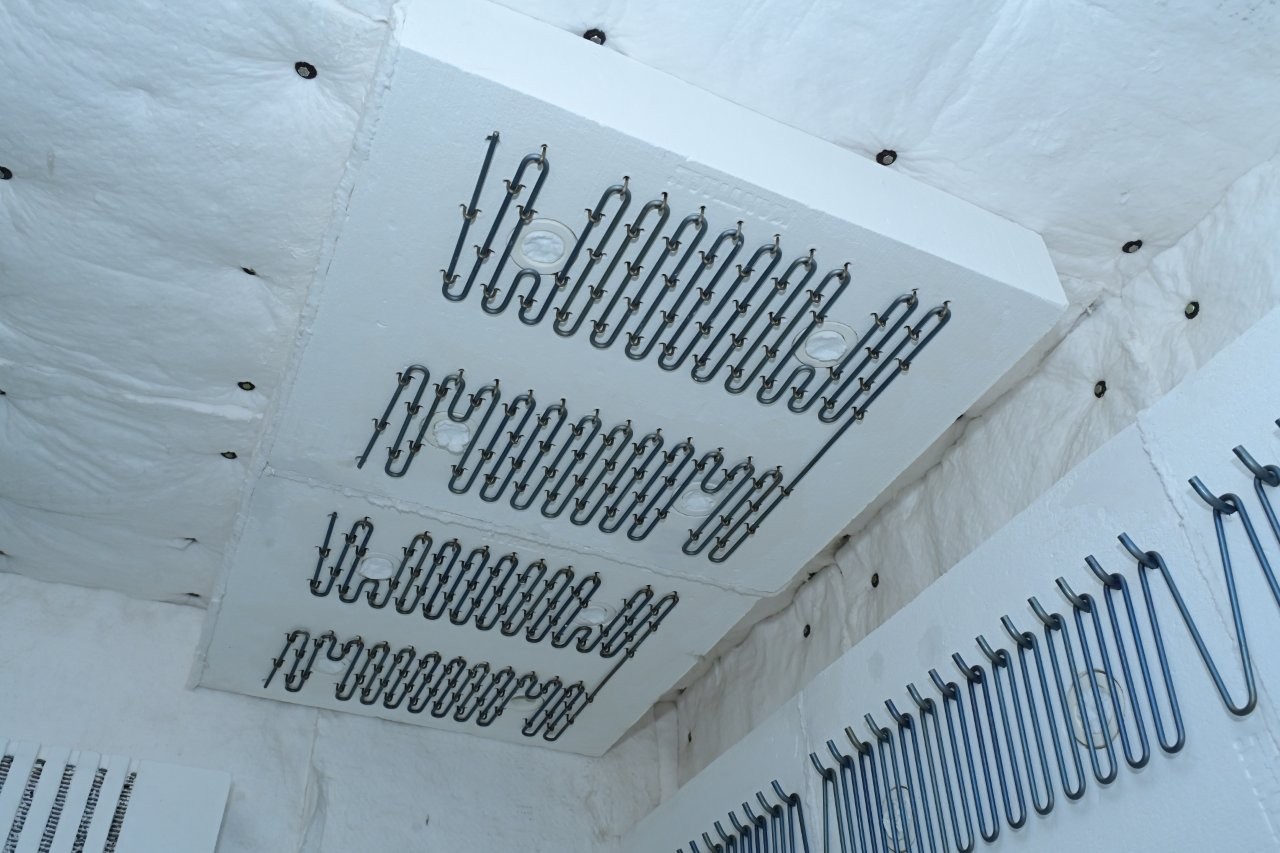
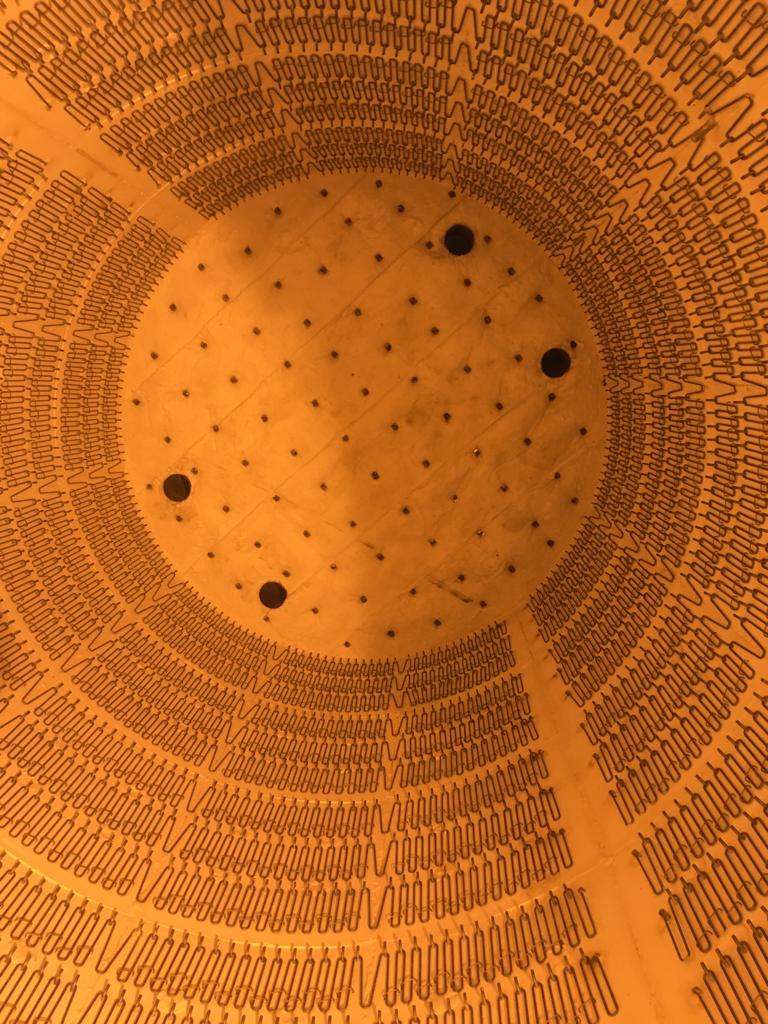
Traditional coil-in-groove heater systems embed resistance coils within cast or rammed refractory structures. This approach provides thermal mass and has been a standard in the industry for decades. But when a heating element fails, the path to replacement runs through that refractory — and that path is rarely short.
Why thermal mass matters more than you think
One of the least-discussed aspects of furnace heating element design is thermal mass — the amount of energy stored in the furnace structure itself. Heavy refractory-based systems absorb and retain enormous amounts of heat. During normal operation, this is partly beneficial for temperature stability. During maintenance, it’s a liability.
A furnace built around high thermal mass must cool substantially before technicians can safely work inside. Once repairs are complete, it must slowly reheat that same mass before the furnace returns to working temperature. Both phases eat into production time.
Ceramic fibre-based modular systems like Fibrothal work differently. Their lower thermal mass means the furnace cools faster after shutdown and reaches operating temperature more quickly after restart — directly compressing both ends of the maintenance window.
The business case: downtime is not just a maintenance cost
When an industrial furnace goes offline for heating element replacement, the direct cost is the labour and parts involved in the repair. But the real cost is wider:
Production output drops while the furnace is idle. Work-in-progress stacks up. Downstream operations waiting on furnace output are disrupted. Delivery schedules slip, sometimes triggering penalties or customer service issues. Energy consumption spikes during recommissioning reheat cycles. And in some processes, atmosphere-sensitive loads inside the furnace at the time of an unplanned shutdown may be compromised.
Viewed through this lens, the engineering choice between a conventional coil-in-groove system and a modular Fibrothal design is not purely a capital cost decision. It is a decision about how much unplanned and planned downtime the operation can absorb — and how quickly it needs to recover when maintenance is unavoidable.
When is modular the right choice?
Modular Fibrothal systems offer the strongest operational advantage in facilities where any or all of the following apply: furnaces operate continuously or near-continuously; unplanned downtime has high downstream consequences; maintenance teams are not always fully stocked with refractory specialists; or furnaces are expected to serve a range of load types over their operating life, requiring flexibility in element configuration.
For lower-temperature applications or intermittent-use furnaces where downtime impact is limited, conventional systems may still be appropriate. The key is matching the heating system design to the actual operational and maintenance profile of the furnace — not just its thermal requirements.