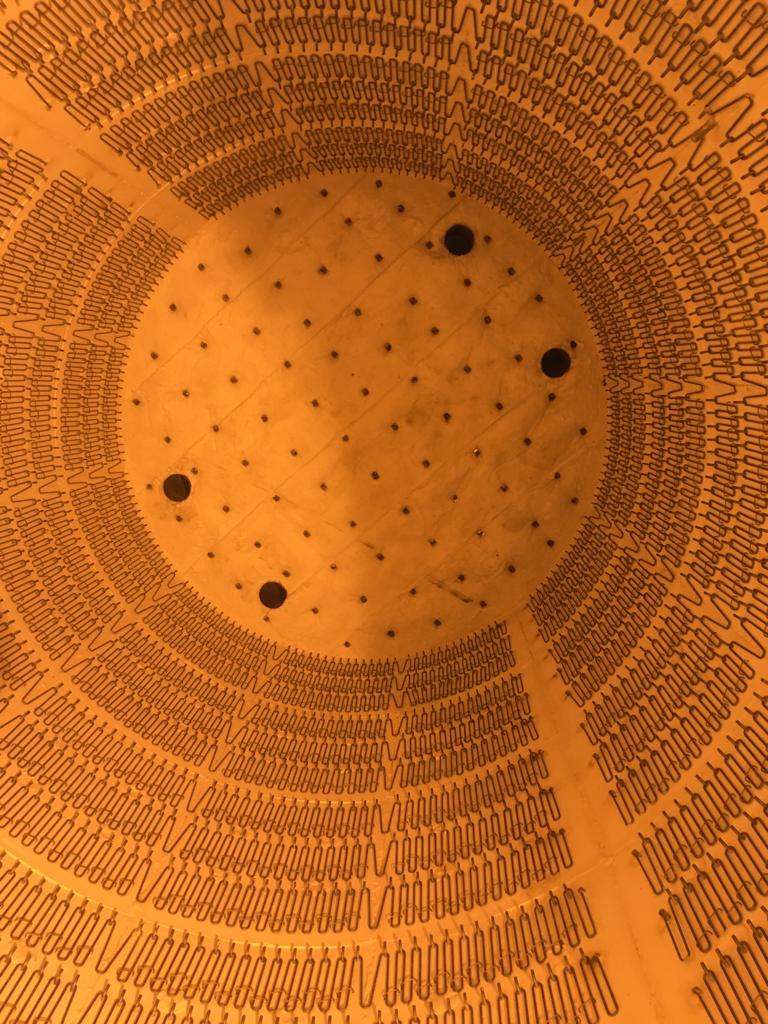
In high-temperature processing plants, the conversation around efficiency almost always focuses on what happens when the furnace is running. Throughput rates. Temperature uniformity. Energy consumption per cycle. These are the numbers that end up on dashboards and reports.
But there’s a silent production killer that rarely gets the same attention: maintenance downtime. Specifically, the time it takes to access, replace, and recommission industrial furnace heating elements after they fail or reach end-of-life.
This article examines why traditional coil-in-groove heater systems create extended shutdown windows — and why modular Fibrothal heating systems are increasingly becoming the operational choice for facilities that treat maintenance speed as a competitive advantage.
The core problem
Industrial furnaces are engineered to run. They’re designed around thermal stability, precise atmosphere control, and consistent output. What they are rarely designed around is how quickly a maintenance team can get inside them.
Traditional coil-in-groove heater systems embed resistance coils within cast or rammed refractory structures. This approach provides thermal mass and has been a standard in the industry for decades. But when a heating element fails, the path to replacement runs through that refractory — and that path is rarely short.
Why thermal mass matters more than you think
One of the least-discussed aspects of furnace heating element design is thermal mass — the amount of energy stored in the furnace structure itself. Heavy refractory-based systems absorb and retain enormous amounts of heat. During normal operation, this is partly beneficial for temperature stability. During maintenance, it’s a liability.
A furnace built around high thermal mass must cool substantially before technicians can safely work inside. Once repairs are complete, it must slowly reheat that same mass before the furnace returns to working temperature. Both phases eat into production time.
Ceramic fibre-based modular systems like Fibrothal work differently. Their lower thermal mass means the furnace cools faster after shutdown and reaches operating temperature more quickly after restart — directly compressing both ends of the maintenance window.
The business case: downtime is not just a maintenance cost
When an industrial furnace goes offline for heating element replacement, the direct cost is the labour and parts involved in the repair. But the real cost is wider:
Production output drops while the furnace is idle. Work-in-progress stacks up. Downstream operations waiting on furnace output are disrupted. Delivery schedules slip, sometimes triggering penalties or customer service issues. Energy consumption spikes during recommissioning reheat cycles. And in some processes, atmosphere-sensitive loads inside the furnace at the time of an unplanned shutdown may be compromised.
Viewed through this lens, the engineering choice between a conventional coil-in-groove system and a modular Fibrothal design is not purely a capital cost decision. It is a decision about how much unplanned and planned downtime the operation can absorb — and how quickly it needs to recover when maintenance is unavoidable.
When is modular the right choice?
Modular Fibrothal systems offer the strongest operational advantage in facilities where any or all of the following apply: furnaces operate continuously or near-continuously; unplanned downtime has high downstream consequences; maintenance teams are not always fully stocked with refractory specialists; or furnaces are expected to serve a range of load types over their operating life, requiring flexibility in element configuration.
For lower-temperature applications or intermittent-use furnaces where downtime impact is limited, conventional systems may still be appropriate. The key is matching the heating system design to the actual operational and maintenance profile of the furnace — not just its thermal requirements.